
State educated founders make up 42% of the total at Series C but face barriers to entry in the UK
SMV launches landmark report into the state of social mobility in the UK startup ecosystem: 4,000+ founders analysed and 300+ interviewed to understand how socioeconomic background affects success.

Founders of 4,000 UK companies (integrated with Crunchbase funding rounds) were analysed, and 300 completed detailed interviews
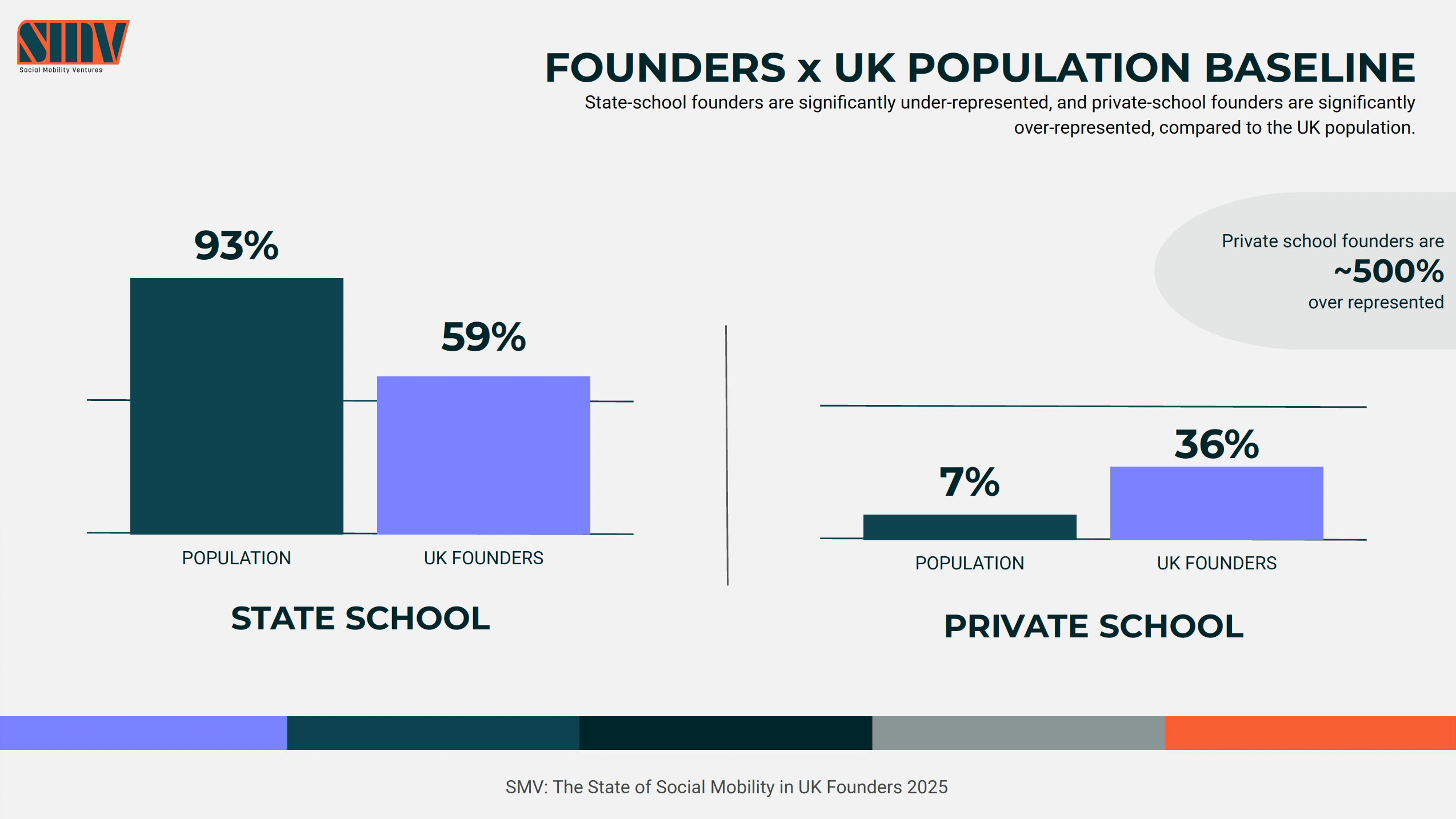
State school founders are underrepresented in the UK-educated founder population when compared to the wider population (59% compared to 93%)
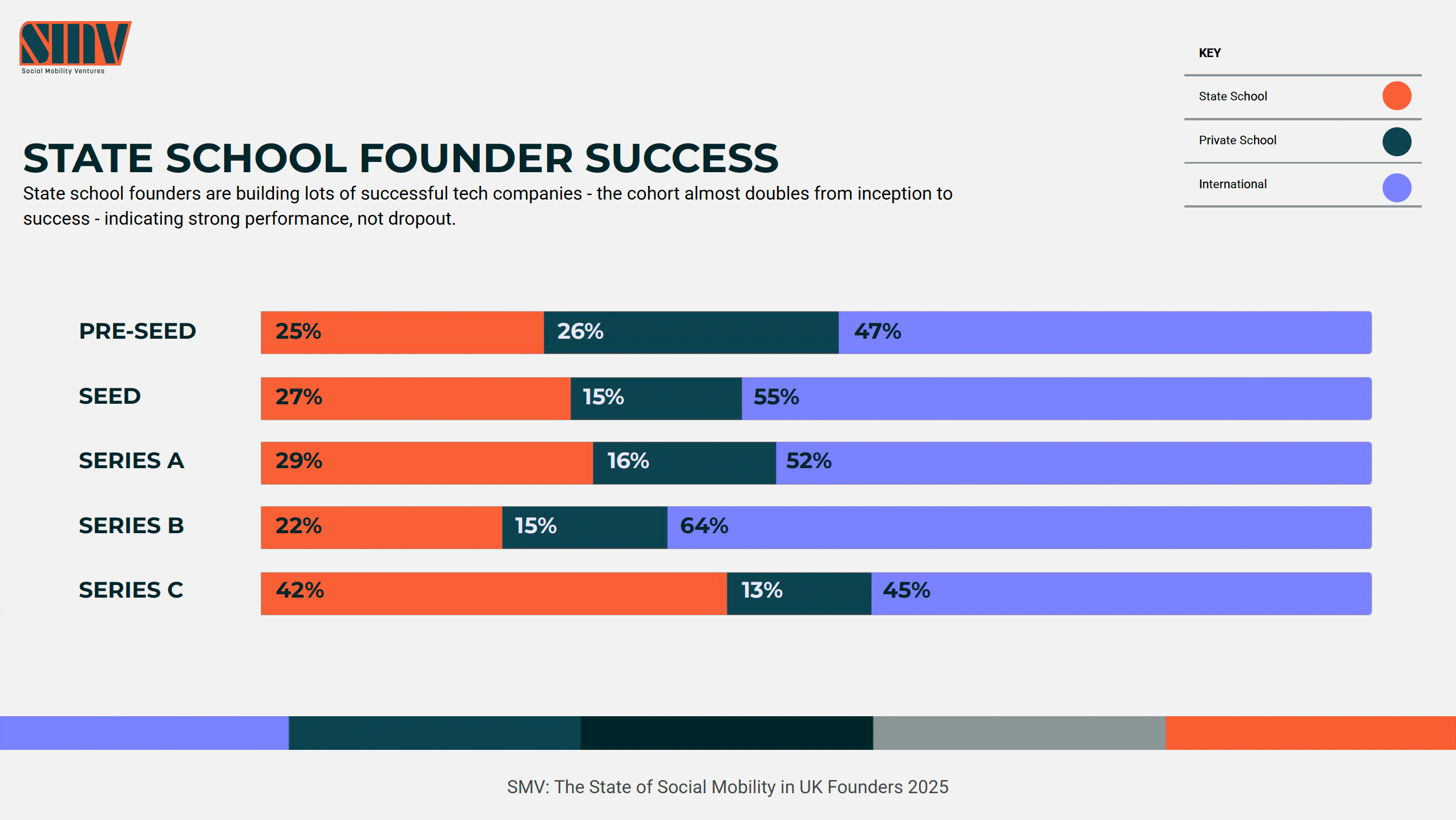
But state school founders are building more long-term success stories, with 42% of Series C founders coming from state school education compared with only 13% private schooled (45% international)
Private school founders are 5x more common in the founder population compared to the wider population (36% compared to 7%)
While 40% of founders at Stealth stage (not yet launched publicly) are state school educated, this drops to 25% at Pre-Seed stage, indicating a barrier to entry.
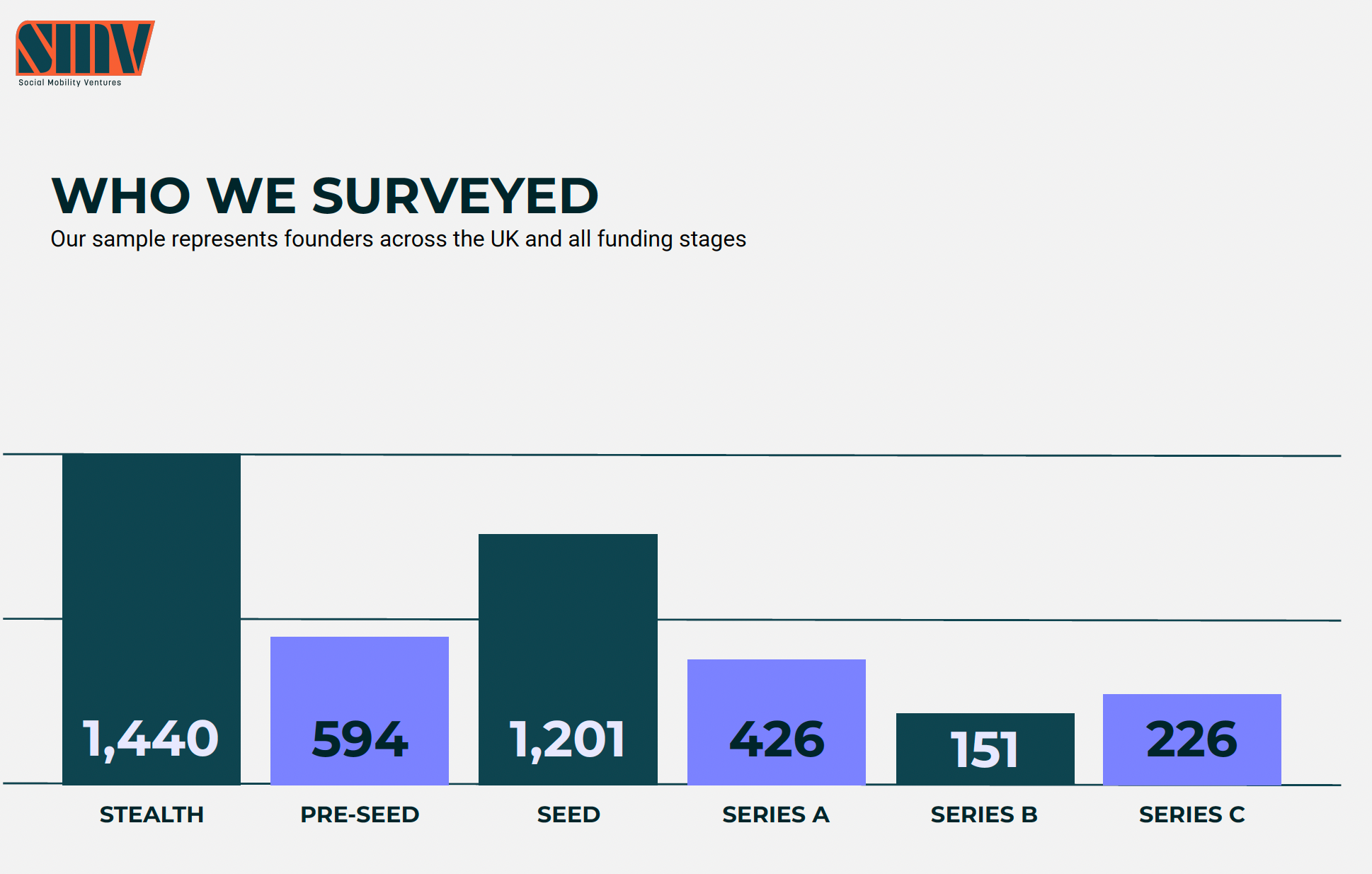
By analysing 4,000+ founders and conducting in-depth surveys with 300+ of them, SMV reveals who actually becomes a founder in the UK, who raises capital, and which companies endure. The data highlights how educational background - state, private, or international - continues to influence entry into entrepreneurship and access to investment.
Underrepresentation in the UK founder population
State school founders are significantly underrepresented in the founder population when compared to the UK population (59% compared to 93%). Private school founders are 5x more common in the founder population compared to the wider population (36% compared to 7%). Only 18% of UK founders come from working class backgrounds, compared to 45% of the wider UK population. Most UK educated founders in our dataset are state educated (32% of the total), but almost half of all founders analysed are international. While 40% of founders at Stealth stage (not yet launched publicly) are state-educated, this drops to 25% at Pre-seed stage, indicating a barrier to entry.
Resilient long term business builders
However, it appears that state school founders are building more long term success stories, with 42% of Series C founders coming from state school education compared with only 13% private schooled (45% international). State school founders are more likely to reach Series A funding and beyond, with 25% of state school founders reaching that milestone compared with only 19% private school founders (28% international).
Difficulty accessing early funding
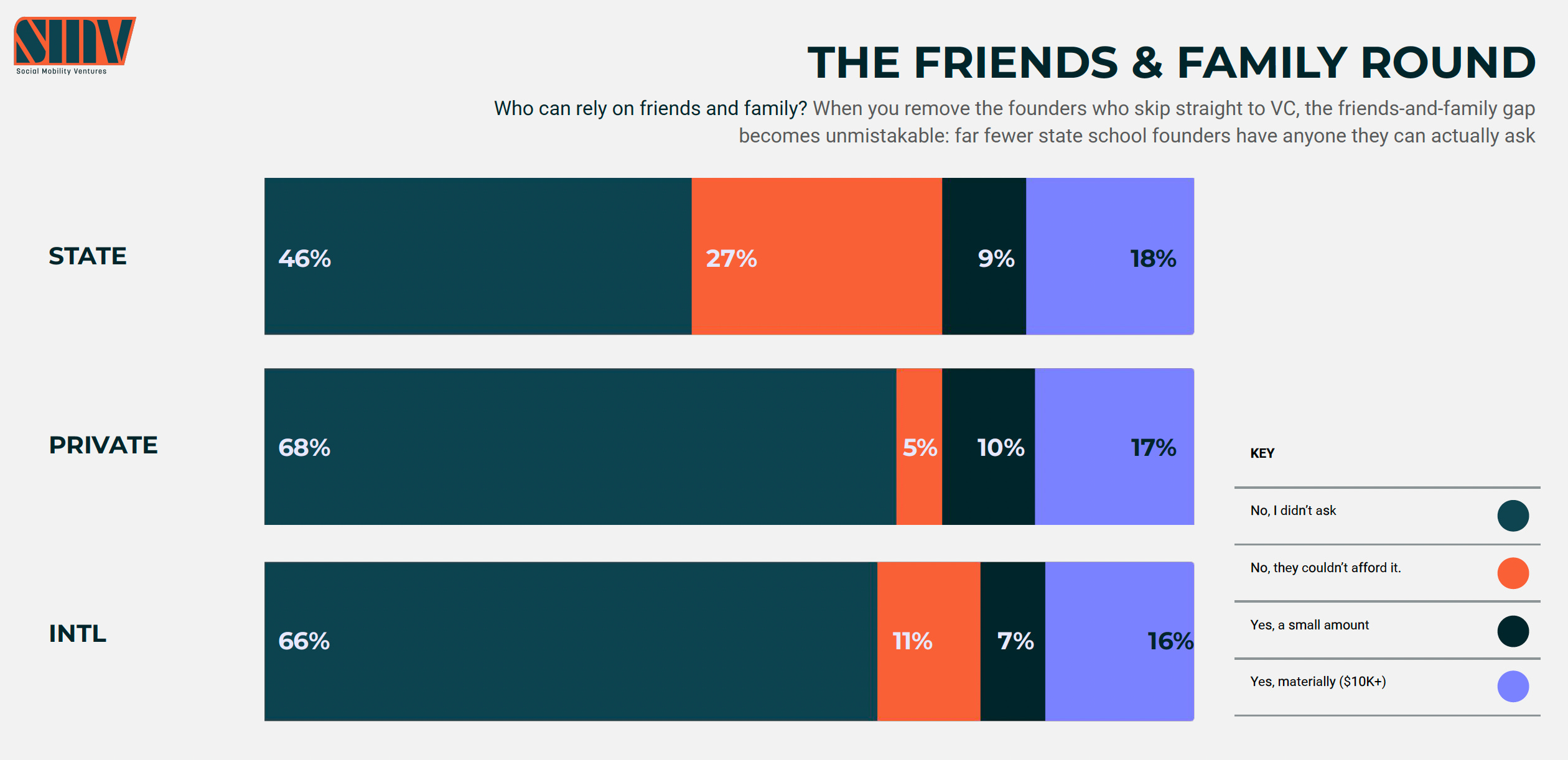
State school founders were 23% more likely to identify access to investors (relationships) as a barrier to fundraising than private school founders. State school founders are 16% more likely to fund the early stages of their business using government grants. Meanwhile, private school founders are 18% more likely to access venture capital to fund their early stages of growth.
As a result, private school founders were 14% more likely to complete their first funding round within the first 3 months of raising and state school founders are significantly (between 17-23%) more likely to delay launching their business due to personal financial runway than private school or international founders.
David Houghton, Founder at SMV, commented: “The UK is full of talented people who want to build companies. But our data shows private-school founders are heavily over-represented in the industry, with state school founders finding it harder to access venture capital.
“We observe a big drop-off in state school founder representation between Stealth companies and those who go on to raise their Pre-seed funding round. Giving these founders the same funding and scaling opportunities as their privately-educated peers could be massive for UK tech. That’s because once state-school founders do get into the pipeline, their resilience and tenacity helps them scale up with extraordinary success.
“Their odds of reaching Series A and beyond are as strong - and often stronger - than their more privileged peers. At later stages, the cohort becomes more state-educated, not less.
“The UK doesn’t have a talent problem, it has an access problem. SMV is here to help fix this. If we widen the pathways into entrepreneurship, the founders – and their breakout companies – will follow.”
Catherine Lenson, Chief Operating Officer at Phoenix Court (supporter of SMV), added: “The findings in this report underline why inclusion isn’t a side project - it’s a source of untapped potential. At Phoenix Court, we see this every day in Somers Town: when you widen access and back people early, remarkable founders emerge from places the ecosystem too often overlooks.”
Niklas Zennström, CEO at Atomico (supporter of SMV), added: “This data shows that world-class founders come from every part of society - what they need is a fair chance to start. If the UK wants to stay globally competitive, ensuring equal access to entrepreneurship isn’t just the right thing to do, it’s a growth strategy.”
The full report and all its findings are available to read or download on the SMV website from 27th November 2025. SMV will be working with its partners such as HSBC Innovation Banking, Phoenix Court, Atomico, Balderton, Nauta and many others at the centre of the industry to grow its community whilst providing founders with direct access to some of Europe’s largest investors. In 2026, SMV will launch new programmes focused on highlighting some of the UK’s most exciting state school founded companies and will be bringing them together at unique events around the country moving forward. If you’d like to become part of the community, either as an investor or a founder, please register on the SMV website today.
This is some fantastic data and analysis all! Will be sharing high and wide. Great work as always :)